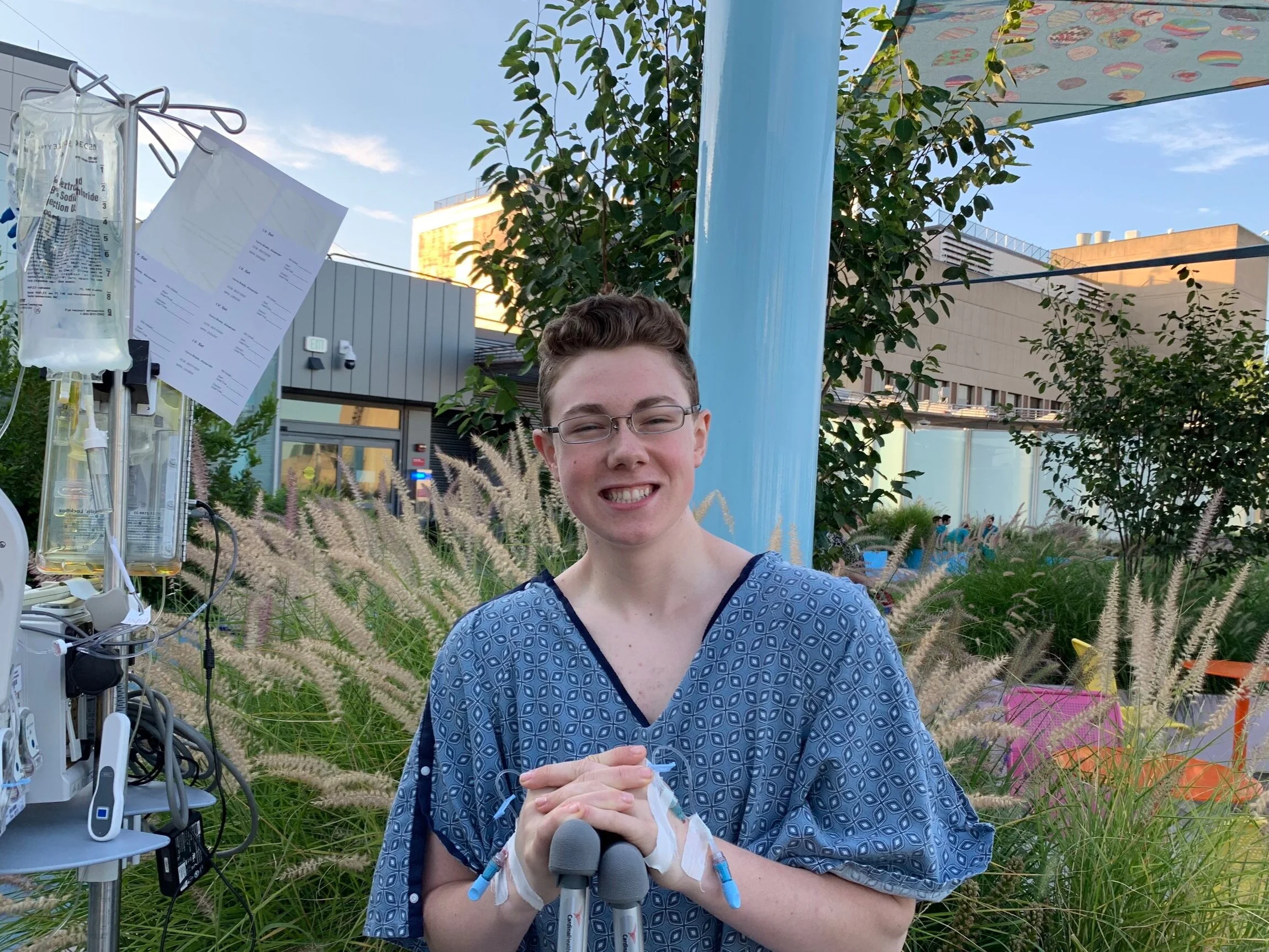
Hi, I’m Alex.
I’m from Carlisle, Massachusetts. In 2019, I had a life-changing limb lengthening surgery, which almost completely eliminated the previously-existing 2.65 inch discrepancy on my left leg. I created this blog to serve as a resource for other children or adults struggling with limb length discrepancies. I had few resources before my procedure other than what the doctors told me. While I knew I could trust some of the finest orthopedic surgeons in the country, I still had some anxiety about the procedure. I hope this site helps you become informed, motivated, and potentially offer a little comfort to whatever emotions you may be feeling.
A little about me: my left leg had always been smaller and shorter. As a young kid, nobody suspected anything was wrong with me. As I got older, however, the difference became more substantial and noticeable. My parents took me to see an orthopedist, whose expertise in the matter of limb lengthening was limited. He suggested a procedure I would have many years later, near the end of my growth, which included surgically damaging my right growth plate (located in the knee between the femur and the tibia) to stunt its growth. The other option presented to us was the fixation of an external cage, named the “Ilizarov Apparatus,” invented by Soviet doctor Gavriil Ilizarov to lengthen limbs and fix bone breaks. This method of surgery was invented in 1951. At the time of our meeting, no other options were available. Upon further investigation, I became extremely uncomfortable with the idea of the Ilizarov cage. A couple quick searches on Google yielded gruesome, Frankenstein-y recovery pictures and surgeries, often with other medical complications. The cage’s pins were driven directly into the victim’s leg, creating potential for infection and discomfort. To lengthen the leg (in the case of a limb length discrepancy), the pins were twisted a certain amount each day until the final length was achieved. With this method, my right leg would continue to grow untouched, and my left leg would be stretched to my right leg’s length. With the first option having the drawback of making me shorter, I focused on the Ilizarov lengthening procedure as my best bet. I put the surgery on my horizon in anticipation.
In 2011, NuVasive released a piece of medical technology that sounded too good to be true. They called their invention the Precise Nail, which had been developed for patients with limb length discrepancies. Since Ilizarov’s 1951 methods were less than perfect, it seemed like new technology was fitting. The Precise Nail contained a small magnet and gearbox, which remotely lengthened the nail. When the nail was inserted into a surgically-broken bone (either the femur or the tibia) and affixed, all lengthening could happen outside the body via a handheld controller made to lengthen the leg from the outside. This procedure was far less invasive than Ilizarov’s method and had no external fixation. The orthopedic surgeon in New Jersey was not familiar with the technology, as it was relatively new, but mentioned the names of some surgeons across the country who were using the nail for the first time. In 2011, I was only 8, and nowhere close to the end of my growth. I had another 7 or 8 years before surgery to fix my left leg would even be considered.
In 2014, we moved to Massachusetts in the Boston area, closer to some of the most talented orthopedic surgeons in the world. After 3 years of the Precise Nail being released, there were sufficient successful surgeries for my new orthopedist to have confidence in the method and practice. All I needed was to reach the end of my growth spurt before fixing the discrepancy. However, my doctor noticed that I was slightly knock-kneed. This, he said, was a common deformation to expect from children with limb length discrepancies. Before using the nail, though, the knock-kneed left leg should be corrected. In April 2016, I had this corrected. The surgery, known as an epiphysiodesis, involved putting an 8-plate on either side of my left growth plate, and affixing the plate with screws. The 8-plate wouldn’t allow growth on the right side of the growth plate, thus evening out the knock-kneed left leg. The recovery time for this procedure was relatively quick. It took about 2 weeks on crutches before I finally got off them. Then another 2 weeks of stretching, physical therapy, and cautious movement before I resumed my normal activities. The procedure worked extremely well. My left leg was perfectly straight and ready for lengthening. A little over a year later, in August 2017, the 8-plate and screws were removed. The surgery was much easier than the first; I was off crutches within a week. Unfortunately, later that year, I hit a major growth spurt which basically undid all the progress the epiphysiodesis had worked for. It was decided that before the insertion of the Precise Nail, I would need to have another 8-plate inserted over my growth plate. In January of 2019, I had another hardware insertion. The procedure went well, as usual, and the 8-plate stayed in my leg during the Precise Nail lengthening.
In August 2019, I was ready for the final surgery. It had been 8 years of anticipation and angst about something I couldn’t control, but the day was finally here. I blogged during the recovery so I would be able to go back and recall how I felt each day after surgery. I’ve edited and posted these blogs to the “Blogs” page. They’re pretty honest. If I had been able to read something like this before my surgery, I would have felt a lot more comfortable.